RV AC Repair in Dallas–Fort Worth
Rooftop AC running but not cooling, not turning on, or icing up? An independent mobile RV technician can find the cause at your RV.
Independent mobile RV technicians come to you — home, storage lot or RV park.
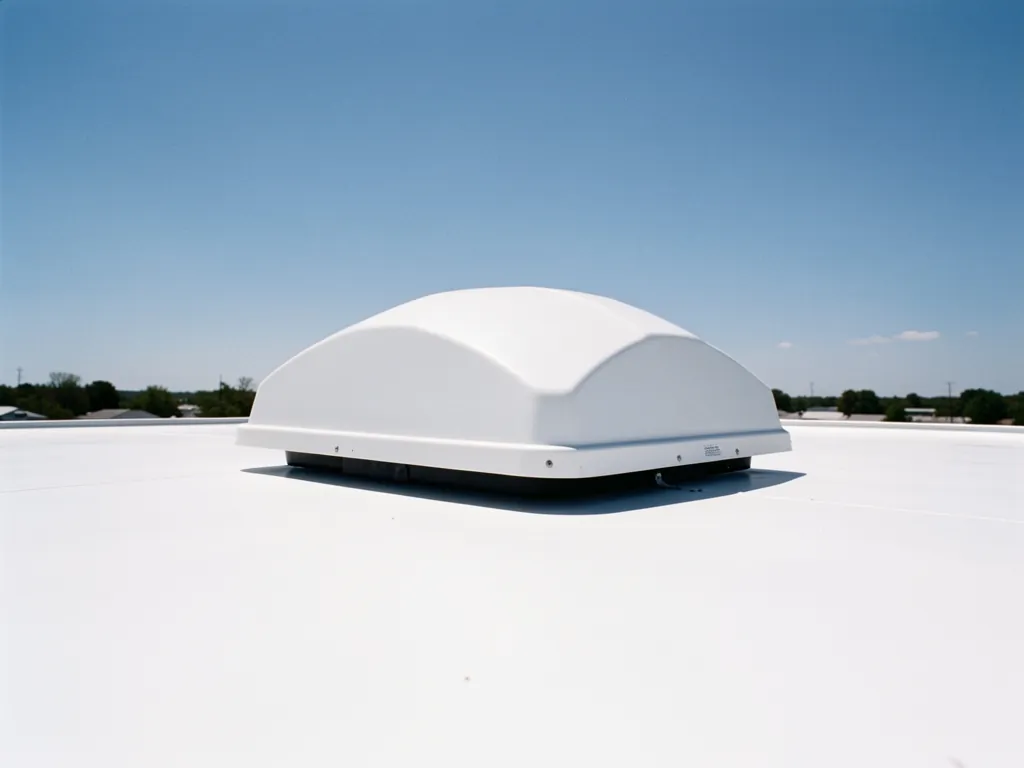
Signs your RV air conditioner needs a technician
How owners usually describe it, and what it often means.
- It blows air, but the air isn't cold
The fan works but the compressor doesn't run, or it runs without cooling. A weak start or run capacitor is a common cause; so are dirty coils or a failed compressor.
- It hums, then the breaker trips
The compressor tries to start and can't. Low voltage at the campground pedestal or a weak capacitor are the first things a technician checks.
- Nothing happens when you turn it on
No fan, no sound. Check the thermostat and the 120-volt breaker first (see below). After that it is usually the control board, the thermostat or wiring.
- Ice on the vents or water dripping inside
Air isn't moving through the unit well: dirty filters, a blocked return or a fan problem. Water inside can also mean the roof gasket under the unit is leaking.
- It works in the morning but can't keep up in the afternoon
In a DFW summer the roof unit is pushing against 100°F air. Dirty coils, low voltage in the afternoon and an undersized unit all show up this way.
- Rattling, squealing or a burning smell
Turn it off. A loose shroud, a worn fan motor or an overheating part needs a technician before you run it again.
What to check before you call
- Thermostat
Set it to Cool, set the temperature a few degrees below room temperature, and set the fan to Auto or High. If your thermostat uses batteries, replace them.
- Power
The rooftop AC runs on 120-volt power from shore power or the generator, not on the battery. Check the AC breaker in the RV's power panel and the breaker at the pedestal. On a 30-amp hookup, don't run the microwave, the electric water heater and the AC at the same time.
- Filters
Pull the return-air filters out of the ceiling unit. If they are dusty, wash them and let them dry. Dometic's manual tells owners to check the filter first if the unit frosts up.
- Vents
Make sure the ceiling vents are open and nothing blocks the return air grille.
- Give it a few minutes
After you switch the AC off, wait a few minutes before turning it back on. Restarting the compressor right away can trip the breaker.
- Voltage at the campground
A surge protector or voltage meter at the pedestal shows if the power is low. Low voltage makes the compressor struggle and can damage it — tell the park office.
Stop here. Don't take the shroud off on the roof or touch the capacitor. A capacitor can hold a charge after the power is off, and roof work needs a safe ladder and footing. This is the technician's part of the job.
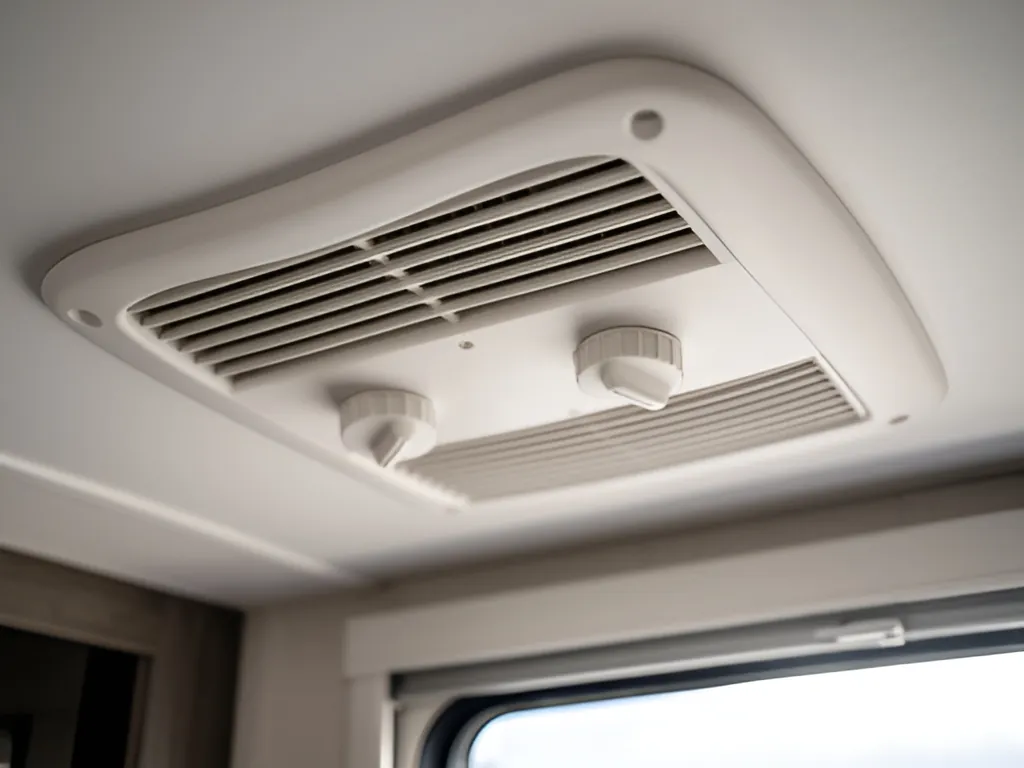
What the technician does
- Checks the voltage at the unit and the power panel.
- Takes the shroud off and tests the start and run capacitor, the fan motor and the compressor's draw.
- Checks the thermostat and the control board.
- Looks at the coils and cleans them if they are dirty.
- Checks the gasket under the unit and the bolts that hold it to the roof — a common source of leaks.
- Explains what failed and gives you a price before replacing parts or the whole unit.
RV rooftop units are factory-sealed systems. If the compressor has failed or the refrigerant leaked out, replacing the unit usually makes more sense than repairing it. The technician will tell you which.
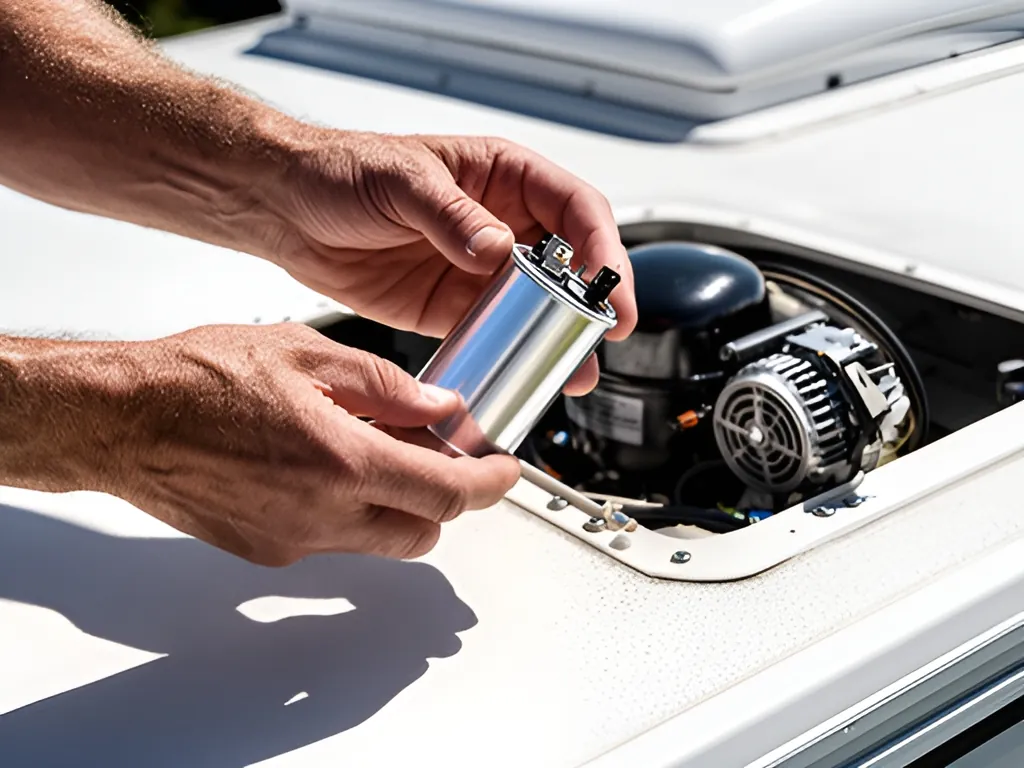
What RV AC repair costs
Typical 2026 ranges from industry cost guides. They are U.S.-wide figures, not Dallas prices.
| Repair | Typical range | Source |
|---|---|---|
| Common AC repairs | $150–1,200 | Camping World, “Mobile RV Repair Cost Guide”, July 2026 |
| Start or run capacitor | $150–420 | Micro-Air, “How much does it cost to replace an RV AC unit”, June 2026 ($150–400); Camping World, “Mobile RV Repair Cost Guide”, July 2026 ($220–420) |
| Fan motor | $200–600 | Micro-Air, “How much does it cost to replace an RV AC unit”, June 2026 |
| New rooftop unit, installed | $800–2,500+ | Micro-Air, “How much does it cost to replace an RV AC unit”, June 2026: 13,500 BTU unit $600–900, 15,000 BTU $700–1,100, heat pump $1,000–2,000+, plus 2–4 hours of labor |
| Technician labor | $140–200 an hour | Micro-Air, “How much does it cost to replace an RV AC unit”, June 2026; Camping World, “RV Furnace Repair Cost Guide”, October 2026 |
Typical range in 2026 — not a quote. The independent technician gives the price after diagnosis.
Most mobile technicians also charge a trip or diagnostic fee. Ask about it when you book.
What changes the price: which part failed, the size of the unit (13,500 or 15,000 BTU), heat pump or not, ducted or non-ducted, and how easy it is to get onto the roof.
Prices checked November 2026.
Brands and models
The rooftop units you see most are Dometic (Brisk II, Penguin II, Blizzard NXT) and Coleman Mach, made by Airxcel. Many fifth wheels and Class A coaches have ducted systems that push air through ceiling ducts; smaller trailers often have a non-ducted unit that blows straight down from the ceiling box. Parts and controls differ by model, so have the model number from the label inside the ceiling unit ready when the technician calls.
Owner's manuals: Dometic Brisk II, Dometic Penguin II, and Coleman Mach and other units in the Forest River component manuals.
RV AC questions
How much does it cost to fix an RV AC?
Common repairs run about $150–1,200 in 2026; a capacitor is usually $150–420 and a fan motor $200–600. A new rooftop unit, installed, is about $800–2,500 or more. These are U.S.-wide ranges from Camping World and Micro-Air — not a quote. The technician gives the price after diagnosis.
Can an RV AC unit be repaired?
Yes, in most cases. Capacitors, fan motors, thermostats, control boards and dirty coils are all repaired on the roof. If the compressor has failed or the sealed system has lost its refrigerant, replacing the unit is usually the better choice.
Do RV AC units need to be recharged?
No. Rooftop RV units are sealed at the factory and don't get a routine recharge. If one stops cooling because of a refrigerant leak, a technician decides whether a repair is worth it or the unit should be replaced.
How do I reset my RV air conditioner?
Turn the AC off at the thermostat, switch off its breaker in the power panel, wait a few minutes, then switch the breaker and the AC back on. Some thermostats have their own reset steps — check the manual for your model. If it trips again, call a technician.
Why is my AC running but not cooling enough?
Dirty filters or coils, low voltage, a weak capacitor or a unit too small for the RV in Texas heat. Clean the filters and check the voltage first. In the afternoon, park in shade if you can, close blinds on the sunny side and run the AC before the inside gets hot.
What is the 3-minute rule for AC?
It means waiting a few minutes after the AC shuts off before you start it again, so the compressor isn't restarting under pressure. Many thermostats build in this delay; if yours doesn't, wait before switching it back on.
Request a technician
Tell us what's wrong and where your RV is. We send your request to independent mobile RV technicians who serve that part of DFW.